Exploring the Historic Communities of the Black Hamptons
On Long Island’s East End, the Hamptons are known for beautiful beaches, waterfront homes, and iconic summer escapes, but within this celebrated destination lies a deeper story of resilience, community, and cultural heritage.
For generations, Sag Harbor has been home to one of the nation’s most significant Black seaside communities. In historic neighborhoods along the shores of Peconic Bay, Black families, artists, entrepreneurs, and professionals built a refuge during the Jim Crow era when segregation and discriminatory housing practices limited where they could live, travel, and vacation.
More than a beach destination, Sag Harbor represents a place of respite, connection, and belonging—a place where Black families could gather, enjoy nature, celebrate culture, build community, create lasting traditions, and invest in future generations.
Today, Sag Harbor carries that legacy forward, preserving the stories, landmarks, and traditions that helped shape what has become known as the Black Hamptons.
A Community Built Along the Water
The story of Black life on Long Island’s East End encompasses generations of free and enslaved Africans, who worked, lived, and set roots in the area throughout the 18th and 19th centuries alongside Native Americans and European immigrants, and entered a new chapter in the 20th century with the emergence of the communities that would give rise to the term “Black Hamptons.”
In the earlier part of the 20th century, classical singer Daisy Tapley, who was the first African American woman to be recorded commercially, entertained notable guests, including composer Harry T. Burleigh and tenor Roland Hayes in her summer home in Sag Harbor before her death in 1925.
In 1947, Brooklyn schoolteacher Maude Terry envisioned creating a summer community where Black families could own homes near the water. Working alongside her sister, Amaza Lee Meredith, who was one of the first female Black architects, she helped establish a subdivision known as Azurest.
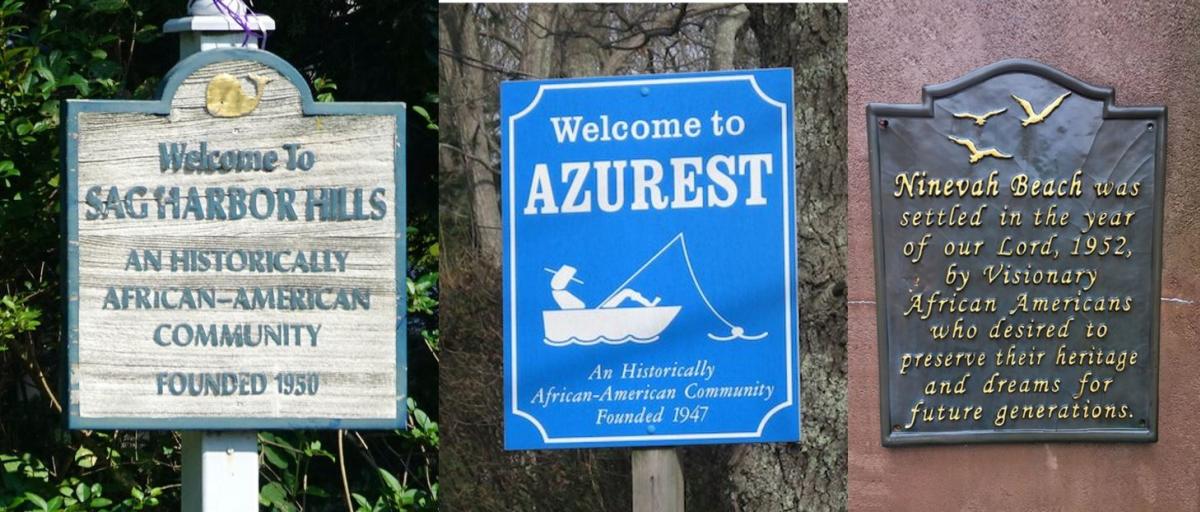
Image Courtesy of Preservation Long Island
At a time when segregation, redlining, and discriminatory housing practices made it difficult for Black families to buy property, Sag Harbor had become a place where African American families could purchase land and build something of their own along the waterfront.
Soon, neighboring communities, including Sag Harbor Hills, Ninevah Beach, Chatfield’s Hill, and Hillcrest Terrace followed. Together, these seaside neighborhoods formed the foundation of what would become the Black Hamptons.
Black educators, doctors, lawyers, and other professionals built thoughtfully designed summer homes for their families, many of which still stand today. Over time, more than 300 Black families purchased homes in the area, creating a thriving summer community where people could gather for beach days, entertaining, and long evenings by the water.
By the mid-20th century, Sag Harbor had become a cultural gathering place for prominent Black artists, intellectuals, civic leaders, entertainers, and professionals. Icons such as Lena Horne, Harry Belafonte, Langston Hughes, and Duke Ellington spent time here, helping shape the community’s reputation as a vibrant summer destination.
Ways to Explore Black History and Culture in the Hamptons
The neighborhoods of Sag Harbor Hills, Azurest, and Ninevah Beach were officially recognized on the National Register of Historic Places as the SANS Historic District in 2019, preserving one of the nation’s most significant Black seaside communities.
Today, you can explore the layered history of Black life on Long Island’s East End by visiting sites and cultural institutions that illuminate the region’s rich heritage and the communities that continue to carry the stories and traditions forward.
One of the most important places to begin is the Eastville Community Historical Society, which preserves the stories of African Americans, Indigenous people, European immigrants, and working-class families who lived in Eastville through exhibitions, archives, and educational programming that highlight the area’s cultural history. Take a self-guided tour to visit landmarks such as the Heritage House, where the historical society is headquartered; the St. David AME Zion Church (believed to have been part of the Underground Railroad) and cemetery; and more to gain deeper insight into one of Long Island's oldest historically African American communities.
A short drive away, the Southampton African American Museum (SAAM), located in a building that has long been a gathering space for African Americans, celebrates the contributions of African Americans who helped shape life on Long Island’s East End through exhibitions, community programs, and cultural events.
While in Southampton, explore the life and legacy of Pyrrhus Concer, who was born indentured, sold into slavery, and gained freedom, becoming a celebrated whaler, entrepreneur, community leader, and philanthropist. Visit his gravesite at North End Cemetery, his church, the former site of his home, and other sites connected to his life on a self-guided tour.
About 20 minutes away, Dia Bridgehampton permanently displays the neon works of artist Dan Flavin, along with a gallery of rotating exhibits within the building that was once home to the First Baptist Church of Bridgehampton. On display, you’ll also find the original church doors, frosted glass windows, a large neon cross, and cornerstone laid by the African American Freemasonry.
A short ferry ride from Sag Harbor, Sylvester Manor on Shelter Island offers visitors a deeper look into the layered history of Long Island’s East End. The historic site interprets the lives of Indigenous people and enslaved Africans who lived and worked on the property, providing important context for understanding the region’s early history.
You can deepen your understanding of African American history in the Hamptons by downloading the free TravelStorys app for an audio guide of the Hamptons Civil Rights Backstory covering the SANS Historical District, Southampton African American Museum, Pyrrhus Concer, and the historic hamlet of Freetown in East Hampton.
Discover More Things to Do in Sag Harbor
Sag Harbor’s vibrant history stretches back to the early 18th century. Once a booming whaling town that was designated as an official U.S. Port of Entry in 1789, it later enjoyed a manufacturing era before evolving into one of the East End’s most sought-after destinations. Today, you can stroll walkable streets lined with restaurants, cafes, local shops, beaches, and harborfront views that make Sag Harbor one of the most charming villages on Long Island’s East End.
The Sag Harbor Whaling & Historical Museum (pictured; open seasonally from May through October) takes a deep dive into the village’s rich maritime history. Explore exhibits and artifacts to learn about its role as a major whaling hub and the diverse communities that contributed to its success, including African American and Indigenous whalers. The Old Whalers Church is another local landmark connected to Sag Harbor's seafaring past, known for its striking architecture and enduring role in the community.
Bay Street Theater, located along Long Wharf, hosts live performances, comedy shows, and cultural programming throughout the year, highlighting the area’s vibrant arts scene.
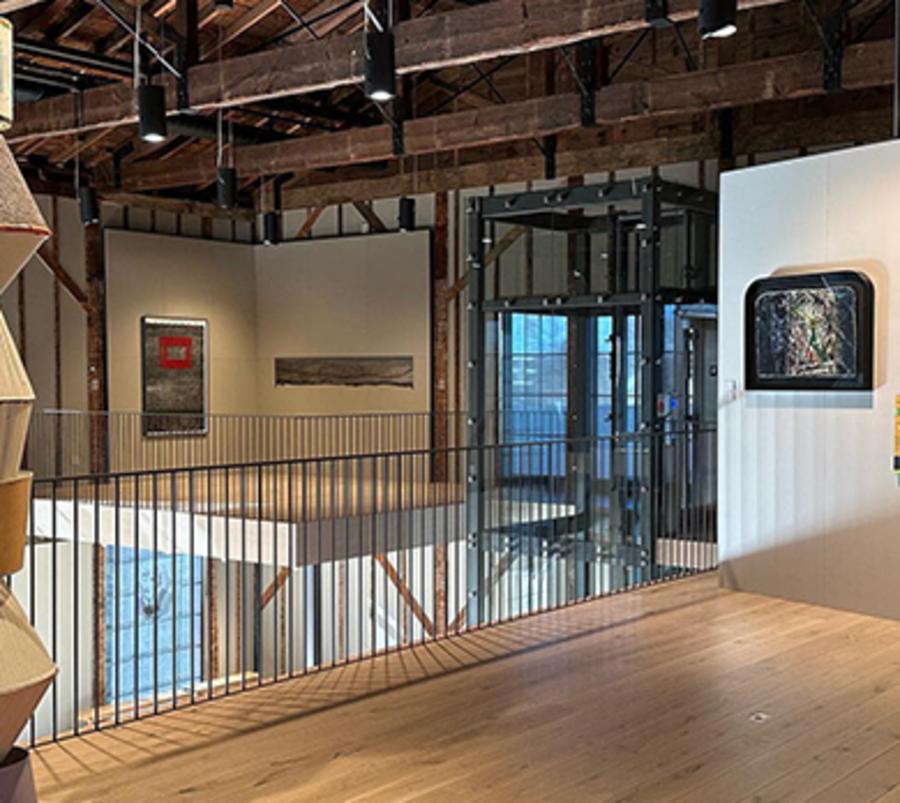
Nearby, The Church Sag Harbor—a historic church transformed into a contemporary arts center—hosts exhibitions, performances, and creative events that celebrate the artistic spirit of the East End.
Havens Beach, overlooking Sag Harbor Bay, is a peaceful stretch of shoreline that has long been a gathering place where families relax by the water, watch sailboats drift across the bay, and enjoy sunset views on warm summer evenings.
Explore More of the Hamptons
While visiting Sag Harbor, explore more of the iconic attractions, cultural institutions, and historic sites that help tell the broader story of Long Island's East End and make it a world-famous destination. From scenic coastal resorts and art museums to local restaurants and landmarks connected to Black, Indigenous, and maritime history, these spots offer even more ways to experience the Hamptons.
Places to Stay
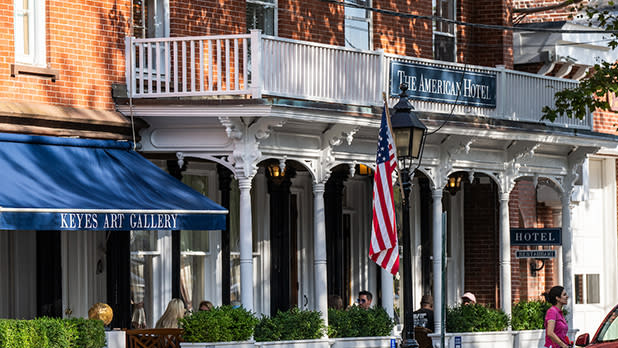
The American Hotel (Sag Harbor) – A historic village landmark built in 1846, offering elegant accommodations within walking distance of Sag Harbor's shops, restaurants, and waterfront.
Topping Rose House (Bridgehampton) - A luxury boutique hotel set on a historic estate offering elegant rooms, lush gardens, and a farm-to-table restaurant led by acclaimed chefs.
Gurney’s Montauk Resort & Seawater Spa (Montauk) - A legendary oceanfront resort known for its private beach, expansive seawater spa, and panoramic ocean views.
Harborfront Inn (Greenport) – A comfortable waterfront retreat overlooking Greenport Harbor, offering easy access to North Fork vineyards and Shelter Island.
Southampton Inn (Southampton) – A classic Hamptons hotel with convenient access to Southampton's beaches, museums, boutiques, and historic sites.
Things To Do

Credit: @mexikko on Instagram
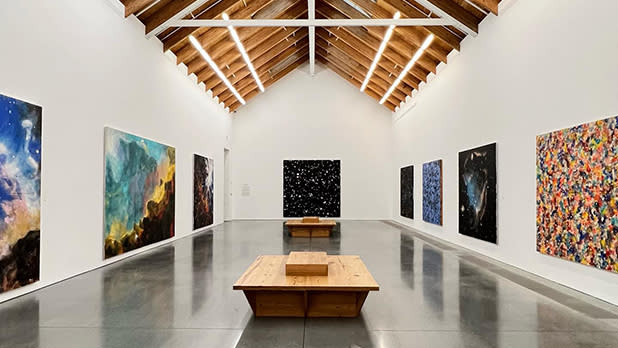
Parrish Art Museum (Water Mill) - Explore a world-class collection of more than 3,000 works of art ranging from 19th-century landscapes to contemporary exhibitions and public programs. Through September 13, 2026, see a major solo exhibition by acclaimed artist Sanford Biggers whose work takes inspiration from Buddhism, graffiti culture, Gee’s Bend quilts, and African sculpture.
Montauk Point Lighthouse (Montauk) - Located at the easternmost tip of Long Island, this historic lighthouse offers sweeping ocean views and exhibits dating back to its authorization by George Washington in 1796.
Amistad Memorial Marker at Culloden Point (Montauk) – Explore the site where a group of illegally enslaved Africans on the schooner La Amistad came ashore before they were detained, setting off a landmark legal battle that reached the U.S. Supreme Court, which ultimately secured their freedom and a return home to Sierra Leone.
Guild Hall (East Hampton) – Enjoy visual art exhibitions, live performances, film screenings, and community events at one of the East End's premier cultural institutions. In July 2026, catch a performance by the Dance Theatre of Harlem and a talk with James Beard Award-winning chef Kwame Onwuachi.
Ma's House & BIPOC Art Studio (Southampton) – Founded by Indigenous artist Jeremy Dennis, this artist residency and communal art space supports BIPOC artists and hosts art and history-based programs.
Where to Eat

Credit: @ellespicsoflife on Instagram
Page Sag Harbor (Sag Harbor) – Locally-loved spot inspired by Sag Harbor’s maritime past, known for its New American fare, cozy indoor dining, and outdoor seating right on Main Street.
Commander Cody's Seafood (Shelter Island) – Legendary Black-owned spot featuring a fresh fish market and laidback dining to get your fried fish fix.
Townline BBQ (Sagaponak) – Known for Texas-style barbecue, smoked meats, and a relaxed atmosphere right on Montauk Highway between Southampton and East Hampton.
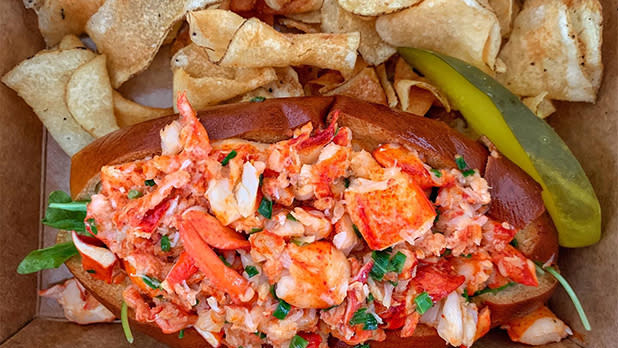
Shinnecock Lobster Factory (Southampton) - A beloved roadside eatery known for lobster rolls, seafood bakes, and fresh seasonal dishes.
Almond Restaurant (Bridgehampton) - A French-inspired bistro serving seasonal dishes like seared scallops and duck breast in a historic and lively setting.
Where to Shop:
Blue One Boutique (Bridgehampton) - Founded in 2007 by husband-and-wife team Jarret Willis and Hamptons native Crystal Smith Willis, the Black-owned boutique is known for its curated selection of contemporary fashion.
NEWSLETTER