 NEWSLETTER

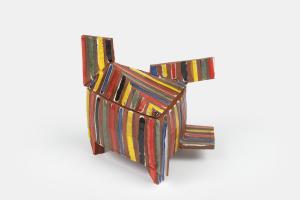 Student-curated exhibition examines science, chance, artistry of ceramic glazes
May 30–September 12, 2026
Saratoga Springs, NY (May 20, 2026) — The Tang Museum at Skidmore College presents Pursuing Possibilities: Explorations in Glaze, a student-curated exhibition featuring works from the Tang collection that explore the expressive possibilities of ceramic glaze. The exhibition will be on view May 30 through September 12 in the Tang’s Winter Gallery.
Organized by Emily Lin ’26, the 2025–26 Charina Endowment Fund Endowed Intern, Pursuing Possibilities examines how the chemical composition of glazes affects the visual outcome of ceramic works. Presenting a range of glazing effects alongside varied surface textures and firing techniques, the exhibition considers the relationship between scientific experimentation and artistic exploration in ceramics—and how chemistry can help drive an artist’s vision.
Glaze is a mixture of water and powdered chemical compounds, including silica, flux, and alumina. Different metal oxides, used in varying quantities, can produce a wide range of colors and visual effects. Artists may alter glaze compositions to create mottling, lustered surfaces, running streaks, and other results. Yet because the final appearance of a glazed ceramic work cannot be known fully before firing, artists must work with both intention and chance.
“As someone who studies art history, chemistry, and studio art, I was fascinated by the way glaze brings together materials, process, and unpredictability,” Lin said. “Glaze is not just a surface. It is chemistry, risk, patience, and creativity all at once.”
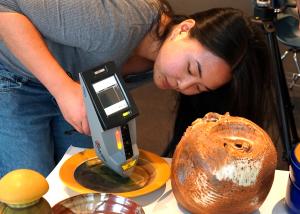 Lin’s research brought together art history, studio practice, and scientific analysis. For the exhibition, she used a non-destructive X-ray fluorescence
instrument, known as XRF, to help identify the chemical composition of selected glazes, and consulted with Matt Wilt, Associate Professor of Ceramics and the Robert Davidson Chair in Art at Skidmore College, about firing environments and ceramic processes.
Her research also included an interview with Kathy Butterly about the artist’s process of working with clay and glaze. A work by Butterly is featured in Pursuing Possibilities, while the Tang’s current major exhibition Kathy Butterly: Assume Yes surveys more than three decades of the artist’s radical ceramics. The project reflects Lin’s academic path as a recently graduated art history major with minors in chemistry and studio art, as well as her interest in art conservation.
The exhibition brings together works by Regis Brodie, Rut Bryk, Kathy Butterly, Nicole Cherubini, John Curry, Detone, Mike Helke, Myrton Purkiss, Robert Sedestrom, Frances Simches, and Malcolm Wright. Together, the works invite visitors to look closely at ceramics as sites of experimentation, transformation, and discovery.
“Pursuing Possibilities is a wonderful example of the Tang’s teaching mission in action,” said Ian Berry, Dayton Director of the Tang. “Emily’s exhibition asks visitors to think across art and science, material and process, control and surprise. It also shows how student-curated exhibitions at the Tang can open fresh ways of seeing the collection.”
The exhibition is the capstone project of Lin’s yearlong Tang internship, which provides a Skidmore student with academic and practical experience in museum work while introducing them to post-graduate professional possibilities. Lin graduated from Skidmore on May 16.
Pursuing Possibilities: Explorations in Glaze is free and open to the public. The Tang Museum, located on the Skidmore College campus at 815 N. Broadway in Saratoga Springs, New York, is open Tuesday–Sunday, noon–5 pm, with extended hours until 9 pm Thursday. For visitor information, call 518-580-8080 or visit tang.skidmore.edu.
What’s on View
Designing Power: The Black Panther Party, through May 31
All These Growing Things, through July 19
Elevator Music 54: Hanna Tuulikki—spinning-in-stereo, through July 19
Kathy Butterly: Assume Yes, through July 26
Hyde Cabinet #31: Before Skidmore — The Woodlawn Estate, through Aug. 9
Inked: Stigma, Otherness, and Art, online through Sept. 27
Sheila Pepe: When & Where We Rest, through Sept. 12, 2027
Opening Soon
Pursuing Possibilities: Explorations in Glaze, May 30 through Sept. 12
About Skidmore College
Founded in 1903, Skidmore College is a highly selective, private liberal arts college of about 2,700 students located in the dynamic town of Saratoga Springs, New York. Consistently ranked as a top liberal arts college by U.S. News & World Report, The Princeton Review, Forbes, and more, Skidmore has also been recognized for its innovation, value, and sustainability efforts. Skidmore fosters academic and personal excellence — all driven by a belief that Creative Thought Matters. Its comprehensive array of opportunities encompasses more than 40 bachelor’s degree programs, including popular offerings in business, psychology, and the creative and performing arts; competitive NCAA Division III athletics; world-class facilities; and hands-on civic engagement and career development resources.
About the Tang Teaching Museum
The Tang Teaching Museum at Skidmore College is a pioneer of interdisciplinary exploration and learning. A cultural anchor of New York’s Capital Region, the institution’s approach has become a model for university art museums across the country — with exhibition programs and series that bring together the visual and performing arts with fields of study as disparate as history, astronomy, and physics. The Tang has one of the most rigorous faculty-engagement initiatives in the nation, the Mellon Seminar, and robust publication and touring exhibition initiatives that extend the institution’s reach far beyond its walls. The Tang Teaching Museum’s building, designed by architect Antoine Predock, serves as a visual metaphor for the convergence of ideas and exchange the institution catalyzes. The museum is open Tuesday through Sunday, from noon to 5 pm, with extended hours until 9 pm Thursday. More information at http://tang.skidmore.edu.
###
Pictured: Emily Lin